Working With the Unexpected in Portrait Photography
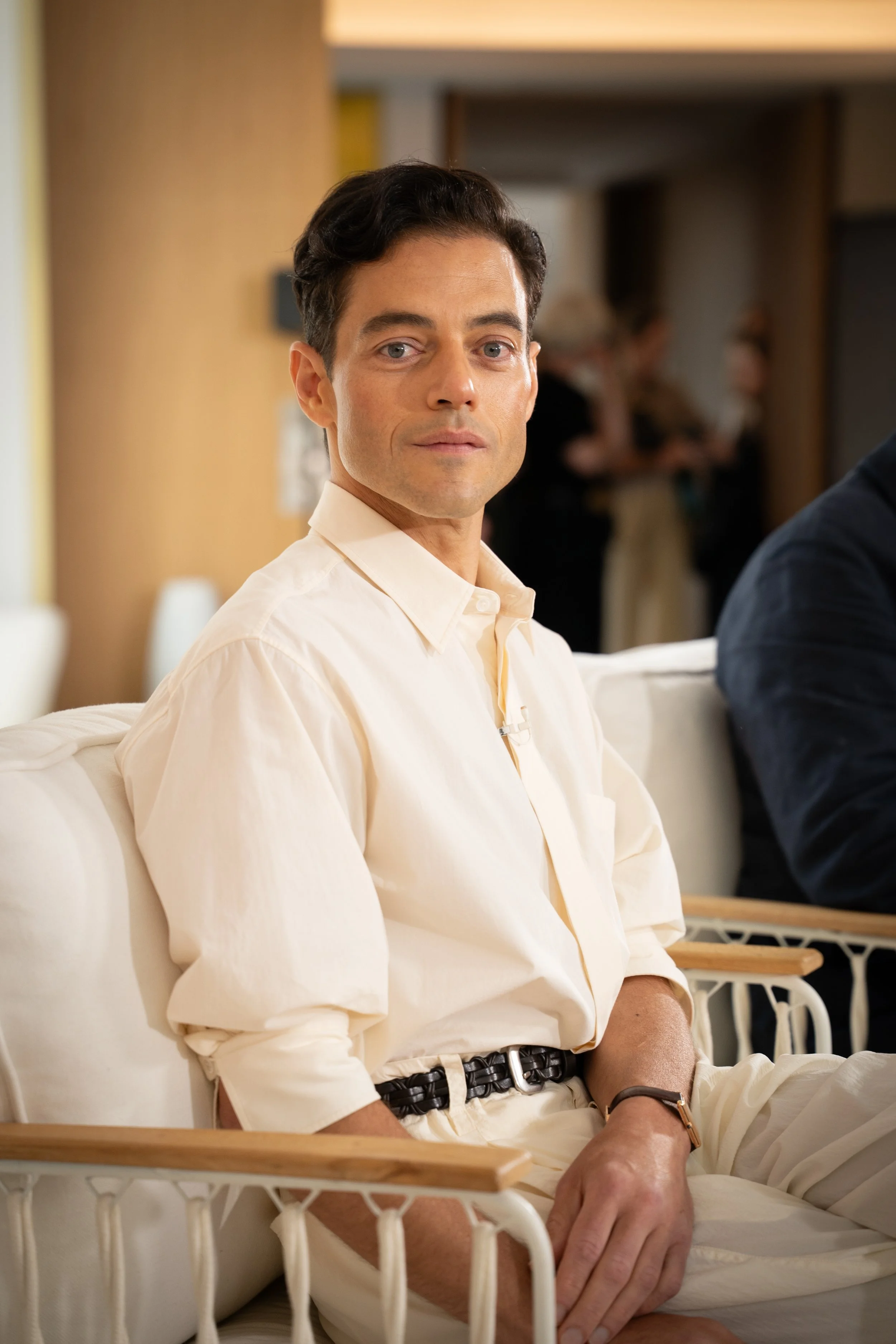
Rami Malek at Cannes Film Festival 2026.
One of my favorite images from this year came from the Kering Suite at the Cannes Film Festival, and it isn’t because I had the best position in the room. Quite the opposite, actually. I arrived late, which is not entirely my fault: celebrity media call times tend to operate more as an optimistic guideline than a precise schedule. By the time I got into the suite, the press line was already packed, the prime angles were taken, and I was left with a spot on the far edge of the room.
It was one of those setups where the equipment comparison becomes immediately obvious. Around me were photographers working with long lenses, serious pieces of glass that looked as though they could capture a close-up from the other side of the Croisette. I had my 24-70mm. It is a versatile lens and one I use constantly, but it was not exactly the most imposing setup in a room built around shooting celebrities from behind a wall of photographers.
There is a particular kind of pressure that comes with being surrounded by people who appear to have more reach, better positioning, or more experience in a specific environment. In an event setting like Cannes, there is very little time to overthink it. You cannot stop to wish you had a different lens, a better spot, or another chance. You work with the room you are in, the light you have, the access you are given, and the brief opportunity in front of you.
The Kering Suite was especially hectic. There were roughly 40 photographers packed into the space, all trying to get a clean frame during a very short media window. Cameras were firing constantly, flashes were going off from every direction, and everyone was working to make their images look as composed and intentional as possible in a situation that was not particularly conducive to either.
We had around 60 seconds to photograph Rami Malek. In the middle of all that activity, he looked directly toward my camera for several seconds. It was long enough that I briefly lowered my camera and looked back at him. I gave him a small bro nod. He did not return it, which, considering there were dozens of people pointing cameras and firing flashes in his direction, was probably fair.
Still, that brief moment made the image. The direct eye contact gave the frame a different energy from the surrounding photographs: less like a quick press-line capture and more like a genuine point of connection, however accidental or fleeting it may have been. It was exactly the kind of detail that can turn an otherwise routine event image into a photograph you remember.
That is one of the things I enjoy most about photographing events. The technical side matters, of course. Equipment matters. A strong position, clear access, good lighting, and preparation all make a meaningful difference. But they are not the full story. A good event photograph often comes down to awareness: noticing a shift in expression, recognizing when someone turns toward you, seeing a clean line through a crowded room, or anticipating a moment before it disappears.
The biggest lens does not automatically make the strongest image, just as the best spot in the room does not guarantee the best frame. Sometimes the image comes from the front row. Sometimes it comes from the far edge, with limited space, a shorter lens, and a very optimistic amount of focal length. The important part is staying ready enough to recognize the opportunity when it arrives.
That is what I like about this photo. It is a reminder that the conditions do not need to be perfect for a moment to be worthwhile. You still have to show up, find your angle, make your decisions quickly, and trust the tools and instincts you brought with you. At Cannes, that happened to mean standing at the edge of a crowded room, surrounded by much larger lenses, and waiting for one brief look straight down the barrel.
